

Reverse recruiting is a newer category of career services.
Instead of spending hours searching for jobs, tailoring resumes, and submitting applications, someone else does it for you. That person is usually a former recruiter. They manage your job search while you focus on everything else.
For some people, it’s incredibly valuable. For others, it can turn into an expensive mistake. And for most, it sits somewhere in the middle.
What Is Reverse Recruiting?
Reverse recruiting is a service where you pay someone to help manage your job search.
That can include:
- Finding relevant job opportunities
- Submitting applications on your behalf
- Optimizing your resume and LinkedIn
- Sometimes providing interview support
It’s called “reverse” recruiting because, unlike traditional recruiting (where companies pay recruiters), here the candidate is the client.
That difference matters.
You’re not being matched to jobs that companies are actively hiring for. You’re paying someone to help you navigate the open market more efficiently.
How Reverse Recruiting Works
The process starts with an intake.
You’ll share:
- Your professional background and work experience
- The types of roles you’re targeting
- Preferences around salary, industry, or location
From there, the provider builds a job search plan for you.
In most cases, they will:
- Rewrite your resume
- Provide LinkedIn profile optimization
- Identify job openings that fit your profile
- Apply to those roles on your behalf
- Draft cover letters as needed
- Track applications and responses
Some services go further and include interview preparation.
The quality of the experience depends a lot on execution. A good service provider will take time to understand your goals. This affects how thoughtfully they apply to jobs on your behalf and how targeted those applications actually are.
Why People Use Reverse Recruiting
The biggest reason is simple: time.
Job searching is time-consuming. Between sifting through job boards, tailoring applications, and tracking everything, it can easily turn into a second job.
This is where reverse recruiting starts to make sense.
You’re paying to offload the process.
Here’s a helpful way to think about it:
It’s similar to hiring a cleaning service for your home. You could do it yourself, but you’re paying to free up your time and mental energy.
For the right person, that’s a legitimate tradeoff.
Tradeoffs to Consider
Reverse recruiting can sound like a shortcut or magic bullet. It isn’t that simple.
You’re still relying on:
- Your experience
- Your positioning
- How well your background aligns with the roles you’re targeting
The service doesn’t change those fundamentals.
Here’s what it does is:
- Increase job application volume
- Reduce effort on your part
- Add structure, tracking, and accountability to the process
The biggest tradeoffs are:
- Cost: Most reverse recruiting services could thousands of dollars
- Uncertain ROI: More applications doesn’t guarantee better results in your job search
- Execution quality: Your outcome can depend heavily on the person you’re matched with and how well they tailor your applications
This is one of those cases where the same service can feel extremely helpful or completely underwhelming depending on the provider.
Is Reverse Recruiting a Legitimate Service?
Reverse recruiting is a legitimate service, but the category is fairly new. That means the main providers are in the space are newer, less established companies. And a lot of providers are solopreneurs offer the service as a side income.
Reverse recruiting can be risky when you’re under financial pressure and it’s a high-stakes situation. Since you’re not guaranteed to land a job right away, signing up for this service when you don’t have the extra funds can leave you with less money and the same problem.
In those cases, some professionals consider reverse recruiting “predatory” — not because the service isn’t real, but because of how it’s positioned relative to the customer’s dire situation.
Is Reverse Recruiting Worth It?
This is where context matters most.
It can be worth it if:
- You’re currently employed
- You have strong, marketable experience
- You understand that you’re paying for time and convenience — not guaranteed results
In this case, reverse recruiting can feel like a luxury service.
You’re essentially outsourcing the most tedious part of the job search while continuing your day-to-day life.
It’s more risky if:
- You’re unemployed and financially strained
- You’re hoping this will “fix” your job search
- You’re unclear on what roles you’re targeting
In those situations, the service may not address the real issue. And because the cost is so high, the downside can feel more significant.
Top Reverse Recruiting Services
There aren’t many established players in this space yet. Below are two solid options from legitimate, credible companies.
Beyond these two, there are smaller, lesser-known providers offering similar services. Several independent recruiters offer reverse recruiting services, but we’ve chosen not to list them here because they’re not very established.
Find My Profession

Find My Profession is one of the more established names offering reverse recruiting-style services. They also offer professional resume writing.
Their approach is structured and leans toward the premium end of the market. In addition to managing applications, their reverse recruiting packages include resume writing, LinkedIn optimization, and broader career support.
The pricing for their reverse recruiting packages range from $2,000 to $4,500 per month.
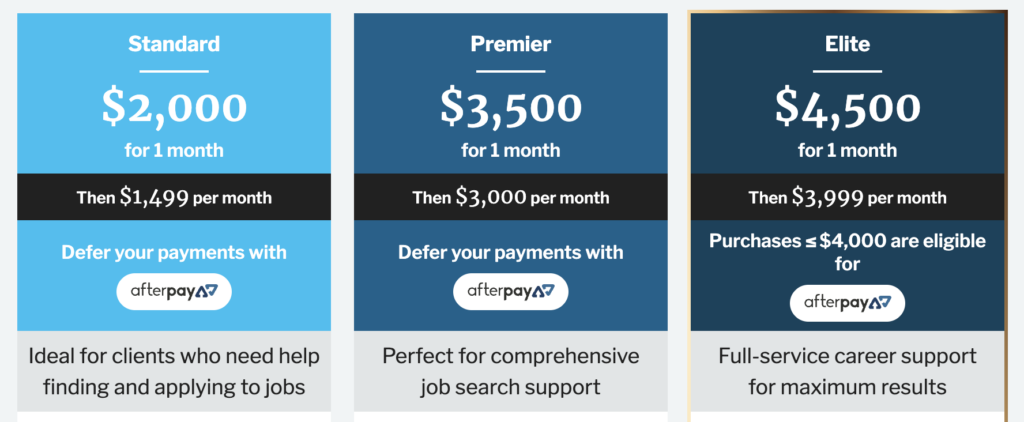
Compared to others in the space, the experience tends to be more standardized and process-driven. It’s closer to a full-service career support model than a lightweight or casual option.
On the Premier and Elite packages, Find My Profession offers a “job offer guarantee.” Here’s the language from their website:
“If you do not receive a job offer or at least 5 interviews after using our services for 6 consecutive service months following your launch date, we will extend your services at no cost until you do receive a job offer or a total of 5 interviews, for up to another 6 service months.“
This guarantee is not available on the lowest end Standard package.
iCareerSolutions

iCareerSolutions is another visible provider in this category and shows up frequently in search results and discussions.
The company has strong reviews and offers services that include resume writing, LinkedIn optimization, application management, and live chat support.
Reverse recruiting packages at iCareerSolutions range from $1,995 to $5,995 for the first month. After that, the packages renew at a discounted price for subsequent months.
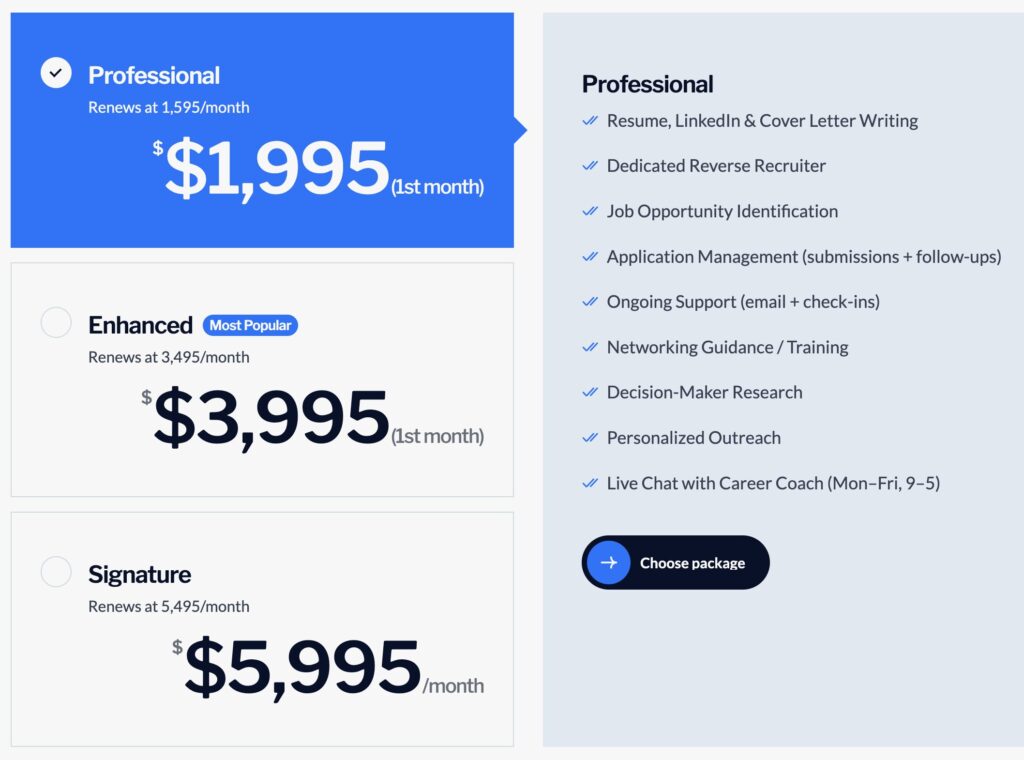
At the same time, the experience can be less clearly defined compared to more structured providers. Although the positioning is ambitious, the overall experience and process may feel more early-stage or startup-like.
How to Choose the Right Reverse Recruiting Service
Follow these steps to ensure you choose the right provider and get the most out of the service.
1. Understand what’s actually included
Different providers include different services in their reverse recruiting package.
Before signing up, you can ask these questions:
- How tailored job applications will be submitted on my behalf?
- How progress is tracked?
- What support is offered after the package is completed, if I haven’t landed a job yet?
2. Clarify communication expectations
Some services are more transactional and others involve more coaching. If you want constant communication throughout the process, it’s a good idea to confirm that’s included the package beforehand.
If that expectation isn’t clear upfront, you might be disappointed by the response times afterward.
3. Evaluate mutual fit, not only the brand
The best service for you isn’t always the most popular one. It’s the one that fits your situation the best.
The provider you choose may depend on things like:
- Your experience level
- Your career goals
- How hands-on you want the process to be
What to Do Before You Commit
Before spending thousands on a reverse recruiting service, it’s worth asking yourself these questions:
- Is my resume already strong?
- Am I applying for the right roles?
- Is my positioning clear across all of my professional documents?
If the answer to those questions isn’t “yes”, consider addressing those things first. Improving those can have a bigger impact than outsourcing your applications.
Final Thoughts
Reverse recruiting isn’t inherently good or bad. It’s situational. For the right person, at the right time, it can save a significant amount of time and effort.
In the wrong situation, it can feel like an expensive detour during a really tough time.
Since this category is new and emerging, there aren’t many major players yet. A few small companies and lesser-known providers currently offer this service. Because of this, it’s important to take time learning about the provider before committing to a reverse recruiting package.
Frequently Asked Questions
Written By

Aliyyah Camp
Aliyyah Camp is the creator of The Offer Inbox. Bringing over a decade of professional experience in marketing, Aliyyah now helps professionals secure meaningful roles and build fulfilling careers.